Thursday, 23 February 2017

(Site Specific) Living Gallery Rehearsals

Different Creative Techniques we tried:

For our first idea, we wanted our performance to have strictly no speaking or verbal communication. However, when it game closer to the performance and our rehearsals became much more developed, we decided it would be best not to limit ourselves, and that we had no reason to neither talk nor not talk, so that rule was revoked and we just decided to let whatever happens happen. We also decided that it would be best if the majority of our piece were improvised. We decided this, as we believed that when a child plays, they don’t plan out what they are going to play, or while they’re playing. So again, why limit ourselves to set blocking when we can truthfully play like children.  The music we wanted to use changed quite a lot, mostly because the entire feel of our piece changed during the development. At first we wanted a minimalistic piano piece with a train station soundscape in the background. We thought that it was the wrong pace for our playful physical decisions. For our final piece we decided on doing a repeated playlist consisting of these songs:


FKJ - Tokyo Improv


Mura Masa - Firefly


FKJ & Tom Misch - Losing My Way


We thought these were lighter, more playful songs to go better with our piece.

Materials we used:


  • Multi-coloured tape 
  • Post-it notes
  • Assortment of toys
  • Pens
  • Large sketch paper
  • Phone torch lights
  • Written messages on walls and floor, 


Here is an interview with Marwan, the curator of the map art and some quotes I find interesting:
http://www.berlinartlink.com/2016/12/25/beirut-shifting-power-an-interview-with-marwan-rechmaoui/

"‘Beirut Caoutchouc’ is a highly critical work that is concerned with issues about urban planning in terms of distribution, volume and accessibility"

"Inspiration is usually the beginning of a creative process that ends up somewhere way beyond the initial idea."
"In times of crisis like these today, when economy and identity feel threatened, people tend to worry more, and that can lead in many cases to conservatism and extremism."


The map of Beirut that we used is a really relevant piece, because of the political situation right now with ISIS and the huge divide of the city, this keeps our piece relevant.

We did some more development of our piece and decided that we would have a helipad made out of tape, symbolising the 'launch' of childhood. We would get people to write their favourite childhood memories on a post-it note and we would stick on the floor. We would connect the post-it's to the helipad and each other, and eventually the tape would creep up the wall to the spider web that we had created. We decided it would be much more efficient to create the web before the performance. We wanted some audience participation and we wanted the audience to feel nostalgic and think back to a time when they used to be playful and infantile and free. Every now and again we would input our physical sequence of the 'spider' running along the wall. We will also have toys laid out and play with them during the piece. We want to convey a message that makes the audience feel nostalgic and happy about their times as a child.


Wednesday, 22 February 2017

(Site Specific) Living Gallery Rehearsals

Today, Jimmy and I looked at how to structure our piece. We wanted to explore how the brain ages. The transition from Childhood to Adulthood and so on and so forth. We feel the Beirut map is a good symbol for the mind of child: Endless roads, opportunities and decisions to make. Then the piece of art made of the hair is a good symbol for the brain in old age, Alzheimer's and dementia. We had the idea that we would use insulation tape and create a tube map, and run toy trains along the tape to symbolise children playing with trains, with the tape symbolsing their freedom of decisions and opportunity. We then wanted to slowly cut parts out of the map, like putting obstacles in the way of the child's imagination, to represent adolescence and the loss of innocence, and stick them onto the wall opposite, slowly creating a spiders web. The web represents the mind of the older people.
We also choreographed a physical sequence once the web was built, where Jimmy was a spider and I would hold him as he scuttled across the wall.

Here is some research on the alzheimer's -


  • Alzheimer's disease leads to nerve cell death and tissue loss throughout the brain. Over time, the brain shrinks dramatically, affecting nearly all its functions.
  • The cortex shrivels up, this can damage memory, planning and thinking ability.
  • Shrinkage is especially severe in the hippocampus, an area that is crucial to the creation of new memories. 
  • Ventricles (spaces filled with fluid) enlarge
  • Alzheimer's tissue has fewer nerve cells and synapses than a healthy brain
  • Plaques, abnormal clusters of protein fragments, build up between nerve cells
  • Scientists are not absolutely sure what causes cell death and tissue loss in the Alzheimer's brain, but plaques and tangles are prime suspects.

What is Alzheimer's really like?


"Imagine giving this drug to someone. Then, have them come to in a strange building, one they have never seen. Surround them with items they have never seen. They can be anything, just things you are sure they would not recognize.
Make sure they are all alone for say five minutes, then one by one, people, complete strangers begin to enter this room and talk to them as if they have known one another their entire lives.
Talk about things they have never heard of before. Talk as if one of them is their daughter, their spouse and their pastor. Tell them they are so sorry for their loss. All the time the person will be wondering what is going on.
Then tell them that you have decided because of their prognosis that you will be taking food and water from them. And then, tell them that everything is going to be alright. What is about to happen will be okay."

SOURCE: https://www.agingcare.com/articles/what-it-feels-like-to-have-alzheimers-177089.htm

Tuesday, 21 February 2017

Performance Evaluation

PERFORMANCE EVALUATION

Here is the exo-skeleton of our show:


My contribution to the piece consisted of many things, and a lot of what I did was also done by the ensemble or with another one or two people. The very beginning of the piece starts with us in Science lab, with some Scientists wandering about contemplating big ideas. Surfin' USA by The Beach Boys starts to play and we did short routine. We then go into separate groups and play out some rehearsed scenes, telling stories of the different people featured in Oliver Sacks' book. My group told the story of the doctor who was struck by lightning when using a payphone, and all of a sudden could play the piano. We used music, song and movement to portray this. 

After this, we would lead our audience to our second space. When we got to the second performance space, we started off by doing some Misorgi, the same way we would start every rehearsal. This helped us prepare for the show and cleans away any previous emotions towards the last piece, as we have to have an empty head for this piece. We did some ensemble stretching and progress to the Octopus, Dolphin, Moonfish exercise that we also used in every rehearsal. I found myself committing more than I ever had before, I think mainly because before the show, Stuart had told us to identify what it was we didn't think we did very well in the show and try and commit to it even more during the performance. This particular part of the sequence went well for me. 

After this, Michelle walks across the room in a twister mat and we all turn away from her. We then partake in a "funeral of childhood" which is a solemn occasion, which turns into the Hokey Cokey. We then played a game (this time it was Stuck in the mud) and turned into aeroplanes. We shot each other down and played the number game. The number game was probably one of my favourite parts of the show. The fact that it was created as something totally random, and still exists as something random just makes it so brilliant. Another brilliant part after this was when we did small solo sequences as teenagers in summer. There was a totally amazing atmosphere that came with this part, maybe because it was one of the first exercises we did as a company so it felt a bit nostalgic maybe. Another one of my favourite parts is when Eden starts to sing like a siren, and everyone gets sleepy and falls into a big "cuddle train", which is quickly disrupted by Joe's awful screeching. The next part of the show was the part I was most skeptical about. We do an exercise (Unsure if it is Artaud or if it is inspired by Artaud) called "Mummy Help Me". I consists of the actors sitting on their knees, stretching as high as they can up to the sky, pleading: "Mummy Help Me!". I didn't take part in this exercise in the actual performance but I did in the rehearsal process. For me, it's quite a heavy exercise and the connotations of it imply something to do with heaven and death, which is quite uncomfortable. As I was the only performer who watched everyone do it in the performance, I still found it uncomfortable. My job was to bring Jimmy down from the stance as he carries on after everyone else finishes. I found watching him cry and sob in pain very disturbing and uncomfortable, and it is difficult to not let personal feelings seep in when watching something such as that, even when you're "in character". I had to let him get to the edge before I could go over to him and relieve him. This was the most challenging part of the play for me and as an actor I really believe I developed from such a harrowing experience. It helped me learn the importance of shutting out personal feelings in times such as then. 

After this exercise, we do, however, embrace and shake out these horrible feelings and me and Jimmy played "Wouldn't It Be Nice?" by The Beach Boys. It's a very soothing song and I think it really grounds the piece and neutralises the carnage we just ensued. We start to move to Jake who does a really brilliant speech about the difference between the real world and the theatre world. 
Joe starts to play his harmonica and our movements start start to become fragmented and we physically react to his harmonica playing. Lloyd  joined in with playing some Jimi Hendrix along with the harmonica. Slowly, Jimmy, Jake and I joined in with the music with our guitars and drums. Every time we did the show, the music we played was improvised and totally different so that added an edge of excitement for me as a musician. Towards the end, the music we make builds up and becomes louder and faster and all the cast reacts to it and the entire show turns very suddenly tribal. There is a sense of euphoria as everyone does call and response and  improvised movement.

Strengths of the piece :-

  • We had a great feel of ensemble
  • The improvised music
  • The improvised movement
  • Group focus

What we could have worked on :- 
  • Performing for the audience instead of ourselves, sometimes we were a bit selfish at times
  • Listening to each other a bit more - sometimes communication was lost during the performance, nothing noticeable, however.


Thursday, 16 February 2017

My Songs Of Joy

This is a small selection of some of my songs of joy..


I Still Believe - Frank Turner
You Got Me - Frank Turner
Losing My Way - Tom Misch and FKJ
Watch Me Dance - Tom Misch
Master Blaster - Stevie Wonder
That's What I Like - Bruno Mars
Like Eating Glass - Bloc Party
Thunder Road - Bruce Springsteen
Peggy Sang The Blues - Frank Turner
Heartless Bastard Motherfucker - Frank Turner
Chameleon - Herbie Hancock
Sheila - Jamie T
Brand New Bass Guitar - Jamie T
Runaways - The Killers
Spaceman - The Killers
Joy Ride - The Killers

Brian Wilson Factfile

BRIAN WILSON

We also used a lot of Brian Wilson's music. He is a revolutionary musician for his work in the studio (double tracking vocals etc.) and out. 
  • Brian Douglas Wilson, born June 20, 1942, is an American musician, songwriter and singer. 
  • He is from Inglewood, California. 
  • He is a founding member of The Beach Boys, although he was largely separate from the band from the 1970s until 2011. 
  • He played bass, sang, and wrote songs for them. 
  • In the 1970s and 80s, Wilson struggled with drug problems and eating too much. 
  • In the 1980s and 90s, he began a solo career. 
Mental Health

  • Wilson experiences auditory hallucinations and has been formally diagnosed as mildly manic-depressive with schizoaffective disorder that presents itself in the form of disembodied voices.
  • According to him, he began having hallucinations in 1965, shortly after starting to use psychedelic drugs.
  • In recent years, Wilson's mental condition has improved, although he still has auditory hallucinations from time to time.
  • Wilson is infamously difficult to interview, rarely ever giving a long answer. According to Salon writer Peter Gilstrap: "He’s also been known to get up, extend a hand and blurt out 'Thanks!' well before the allotted time is up. And sometimes he just gets tired and shuts down. None of this, however, is due to a bad attitude."

Music and Legacy 

  • Wilson popularises the idea of the recording studio as a compositional tool by using recording sessions as fertile creative terrain in and of themselves, a practice which was unheard of in his time and later shorthanded as "playing the studio"\
  •  He was the first rock producer to use the studio as a discrete instrument.


Discography

  • Brian Wilson (1988)
  • I Just Wasn't Made for These Times (1995)
  • Orange Crate Art (1995) (with Van Dyke Parks)
  • Imagination (1998)
  • Gettin' in Over My Head (2004)
  • Brian Wilson Presents Smile (2004)
  • What I Really Want for Christmas (2005)
  • That Lucky Old Sun (2008)
  • Brian Wilson Reimagines Gershwin (2010)
  • In the Key of Disney (2011)
  • No Pier Pressure (2015)

Brian Eno Factfile

BRIAN ENO

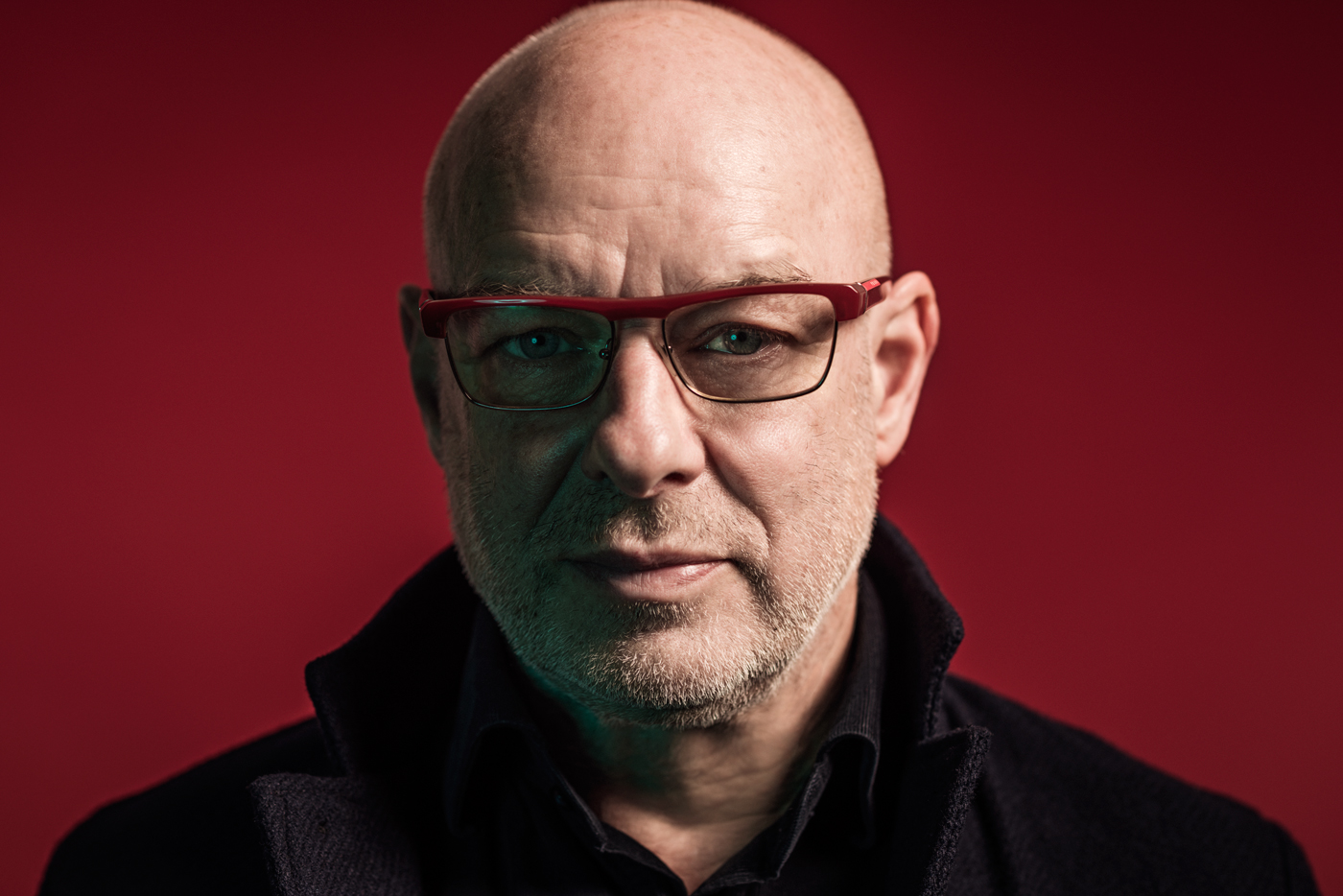
Brian Eno has been an absolutely massive part of our process. Week in week out, his music has been played as stimulus, accompaniment and a main focus.
Born in Suffolk, Eno studied painting and experimental music at art school in the late 1960s before joining glam rock group Roxy Music as synthesizer player in 1971. After recording two albums with the band, he departed in 1973 to record a number of solo albums, contributing to and ultimately coining the concept of ambient music.


His discography includes:

        ALBUM NAME           (YEAR)     LABEL


  • Here Come the Warm Jets (1974), Island
  • Taking Tiger Mountain (1974), Island
  • Another Green World (1975), Island
  • Discreet Music (1975), Obscure
  • Before and After Science (1977), Polydor
  • Ambient 1: Music for Airports (1978), Polydor
  • Music for Films (1978), Polydor
  • Ambient 4: On Land (1982), EG
  • Apollo: Atmospheres and Soundtracks (1983), E.G.
  • More Music for Films (1983), E.G.
  • Thursday Afternoon (1985), E.G.
  • Nerve Net (1992), Opal
  • The Shutov Assembly (1992), Warner Bros.
  • Neroli (1993), All Saints
  • The Drop (1997), Thirsty Ear
  • Another Day on Earth (2005), Hannibal
  • Small Craft on a Milk Sea (2010), Warp
  • The Ship (2016), Warp
  • Reflection (2017), Warp
  • Ambient installation albums[edit]
  • Extracts from Music for White Cube, London 1997 (1997), Opal
  • Lightness: Music for the Marble Palace (1997), Opal
  • I Dormienti (1999), Opal
  • Kite Stories (1999), Opal
  • Music for Civic Recovery Centre (2000), Opal
  • Compact Forest Proposal (2001), Opal
  • January 07003: Bell Studies for the Clock of the Long Now (2003), Opal
  • Making Space (2010), Opal
  • Lux (2012), Warp

Personal life and beliefs: 

  • Eno has referred to himself as "kind of an Evangelical Atheist" but has also professed an interest in religion.
  • The Nokia 8800 Sirocco Edition mobile phone features exclusive music composed by Eno. Between 8 January 2007 and 12 February 2007, ten units of Nokia 8800 Sirocco Brian Eno Signature Edition mobile phones, individually numbered and engraved with Eno's signature were auctioned off. All proceeds went to two charities chosen by Eno: the Keiskamma AIDS treatment program and The World Land Trust
  • In 1967, at the age of 18, Eno married his first wife Sarah Grenville. They had a daughter, Hannah, born in July 1967, before divorcing. Eno married his manager Anthea Norman-Taylor in 1988; they have two daughters, Irial and Darla.


Lesson 4 - 24.1.16

LESSON 4 - 24.1.16

We started the lesson with some Misorgi. We cleaned the room and then cleaned ourselves. Cleansing the room makes it easier to work as there are no physical distractions which can help us when we practice our Somadhi. Using water to cleanse our body is useful as it gets rid of the outside world and helps us connect with the room. It helps us also with our Somadhi and focusing on one thing.

We then did the Shoal of fish exercise (Octopus, Dolphin, Moonfish) again. It is based off of a complicite exercise. Complicite formed 25 years ago and this exercise is about being individual but contributing to a group. It focuses on space, play and adventure. It helps give a common language to performers especially in a game where verbal communication is not used.
In today's version we used these pieces of music to create our Octopus', Dolphin's and Moonfish:

Brian Eno - Reflections


Brian Eno - Horse


Beach Boys - Warmth Of The Sun 


We then took part in an exercise called the Sacred Space/Circle. We created a space out of shoes/various objects and inside the space was the theatre and outside was an audience space. Anything could take place in this space and it was all totally improvised. In my opinion, this was a truly magical exercise. There were quite a few brilliant moments that I took part in and observed from inside and outside of the space. 

These moments were particularly notable: 

Lots of guitar collating - There were lots of moments where the guitars would come together and play songs and music and it really brought a mood to the piece.

People listening to music with each other - I observed this from outside the space. A couple of people were sharing headphones and were listening to a song they knew mutually. They were both having a good time and it was so cool to see two people creating a world of their own by just listening to music, despite whatever is happening in the rest of the space.

Roseby listening to music on the outside - I was on the outside of the circle and so was Roseby. There was a really beautiful moment where she had picked up some headphones and put them on (they were somebody else's headphones). She then continued to observe the space whilst listening to whatever was playing in those headphones. It was interesting to think that maybe the music she was listening to influenced how she portrayed things in the scene. This could be an interesting idea for a performance. 

Talking with numbers - One group of people were conversing and playing games, but only using numbers to communicate. They seemed to playing games like children and again much like children, making up the rules as they go. It brought a lot of innocence to the piece and made me smile in a simple way.

Daniella with lights on her head - Daniella had fairy lights on her. It was simple, but beautiful and effective. Ethereal.

Child-like behaviour - There was a general feeling of juvenility within the piece

Daniels party ring shapes - Throughout the piece Daniel created an unhappy face/ and  a love heart out of the party rings. This made me smile.

Jimmy presenting Daniel with a heart - When Daniel had created the unhappy face, Jimmy bit a Jaffa Cake into a loveheart shape and offered it to him.

Jake and his bike -  Jake would intermittently come into the circle with his bike and every time he did people would start to follow him. 

Joe and his harmonica - This really brings emotion to our piece. It's a good non verbal narrator and fits well with all the guitar playing too.

The amount of non verbal communication -  This exercise was brilliant as not many people were being vocal with their communication, and if they were, then it wasn't English. This was so interesting to watch people interact like children, where language and vocabulary isn't a barrier to communication. 

Jake throwing jaffa cake into air and screaming and everyone reacts - Jake threw a jaffa cake into the air and he made a high pitched scream. A lot of people then reacted the same way, almost rejoicing the great jaffa cake god. 


Lesson 3 - 17.3.16

We started this session with some Misorgi. We cleaned our space that we were working in so that it was ready for us to start making some work. We then cleansed ourselves with some water and fruit so that we were clean  and refreshed.
We did some stretching and Stuart added a stretch in which is called the boat.
This stretch is a very good stretch as it really works your centre and your core strength.
We then did an exercise based on trust where half the class would walk around with their eyes closed, and people with their eyes open would tap them on the shoulder and the other person would fall back into their arms. This exercise is perfect for forming trust and creating a sense of ensemble with a new company and I think it worked really well as I felt safe when I had to fall into people's arms and I hope I ensured that trust into other people. 

We then looked at a Complicite exercise which we renamed Octopus, Dolphin, Moonfish. This exercise requires us to react to a piece of music and create an individual 'Octopus'. Then we gradually had to form with a few other people and develop our movement together. This was how we formed a group of Dolphins. And again, eventually we had to form together as an entire company as Moonfish, everyone doing their variant of one different move. It was a really great exercise to help form a sense of ensemble and also for improvising a physical sequence. We did this exercise to 3 pieces of music and each time, everyone's movements were totally different and unique. 

Mozart - Adagio in B Minor, K. 540 (composed by Vladimir Horowitz)

The XX - Violent Noise

Brian Wilson - Our Prayer


We then looked at the workshops we each had prepared in our groups for Yoshi Oida, Peter Brook, Antonin Artaud, Oliver Sacks and Brian Wilson. This is some information I gained from these presentations and workshops.


ARTAUD - Antonin Artaud believed in assaulting the audience and came up with the Theatre of Cruelty. He wanted to put the audience in the middle of the action so that they were engulfed and physically affected by it. He put a large emphasis on sound rather than dialogue. We did a great workshop with Jake where he explained how Artaud believed the world of theatre is completely different to the real world, so there are different rules that apply. He asked people to shoot each other and kill each other. He managed to revive a kind of primal instinct inside of us. We had to lay down and imagine that we were killing the two people next to us. It was a bit strange because he somehow managed to make me feel angry at nothing and for no reason.


SACKS - Oliver Wolf Sacks (9 July 1933 – 30 August 2015) was a British neurologist, writer, and amateur chemist. He was Professor of Neurology at New York University graduate School of Medicine. The 1990 movie Awakenings was based on his book 'The Man Who Mistook His Wife for a Hat'. The book consists of of 24 essays split into 4 sections. He often takes inspiration from patients he has experienced during his time as a neurologist. He also wrote a book called: Musicophilia: Tales of Music and the Brain. It is a 2007 book by neurologist Oliver Sacks about music and the human brain. We looked at the different stories explored in it in our final piece:

- One man, who was a doctor and not musically skilled whatsoever, was once struck by lightning. As he recovered, he discovered that he could suddenly play the piano and read music. One of the pieces he could play almost instantly was Winter Wind by Chopin. 

- Another man had an aneurism and as a result he felt no emotion and could not ever interact with others properly due to this. However, Goodnight Irene by Huddie "Lead Belly" Ledbetter was played to him and he got up and danced to this song ecstatically. 

- Somewhere Over The Rainbow - Judy Garland was played to someone with Alzheimer's who could't speak, however they sung this song when they heard it. 

These are all examples of how music can be a temporary medicine.

OIDA - Yoshi Oida has been acting in Theatre and television since 1953. In 1968 he went to France to work with Peter Brook. In his book "The Invisible Actor" he tells of his time as an actor in Japan. We did an exercise where we had to take 2 different films and create a piece by fusing them together. This was because Oida liked to create fusion theatre, mixing multiple cultures to create something new. We also watched a video of him during a performance where he plays a character who is paralysed on one side of his body. The scene shows him shaving and it was amazing to see how when he moved to the paralysed side of his body, how you can really tell he was paralysed. 

BROOK - Peter Brook is an English theatre and film director who has been based in France most of his life. He has been called "our greatest living theatre director". He directed his first ever play in 1943 and is still doing so to this day. Brook has been influenced by the work of Antonin Artaud and his ideas for his Theatre of Cruelty. Brook has collaborated with a range of directors, writers and actors during his career including: Paul Scofield and Glenda Jackson; designer Georges WakhĂ©vitch, and writers Ted Hughes and William Golding.

WILSON - Wilson experiences auditory hallucinations and has been formally diagnosed as mildly manic-depressive with schizoaffective disorder that presents itself in the form of disembodied voices.
He began having hallucinations in 1965, shortly after starting to use psychedelic drugs.
In 1984, Wilson had been diagnosed as paranoid schizophrenic, with doctors finding evidence of brain damage caused by excessive and sustained drug abuse. Wilson's understanding of music theory was self-taught. The first instrument he learned to play was a toy accordion before quickly moving to piano and then bass guitar. From an early age, Brian demonstrated an extraordinary skill for learning music by ear on keyboard.